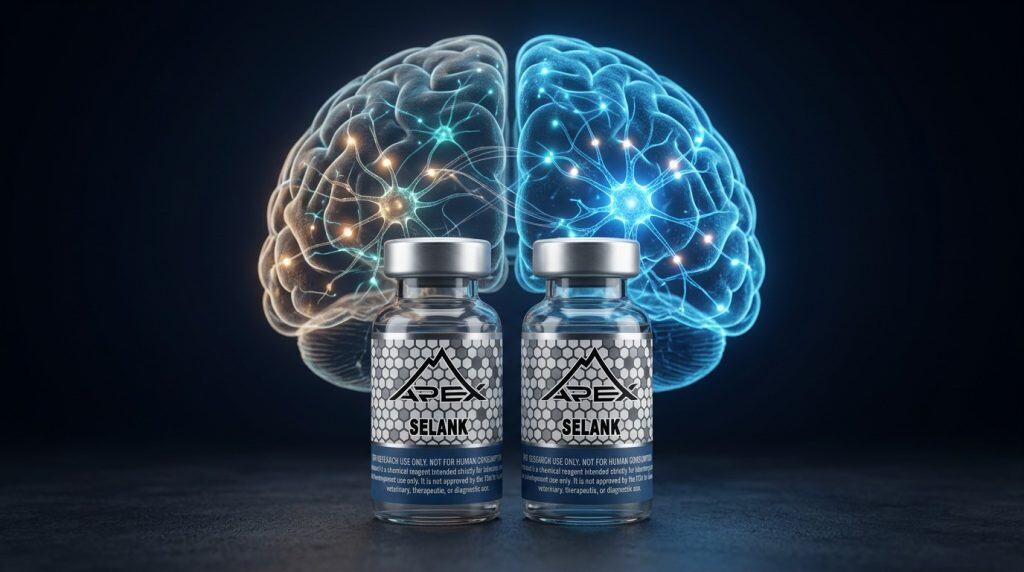
Selank and Semax are two synthetic heptapeptides developed at the Institute of Molecular Genetics of the Russian Academy of Sciences: Selank (Thr-Lys-Pro-Arg-Pro-Gly-Pro) is an analog of the immunopeptide tuftsin studied as an anxiolytic, while Semax (Met-Glu-His-Phe-Pro-Gly-Pro) is an analog of the ACTH(4-10) fragment studied as a neuroprotective nootropic. In animal and clinical research the two are characterized by distinct profiles — Selank acting largely through GABAergic and immunomodulatory mechanisms, Semax through upregulation of the neurotrophins BDNF and NGF.
Selank and Semax are frequently studied and sold together because they share an origin, a structural strategy, and a research field — the CNS — yet they are pharmacologically distinct molecules. Both are short, synthetic heptapeptides designed by extending a biologically active fragment with a C-terminal Pro-Gly-Pro tripeptide that resists enzymatic breakdown.[1][2] Selank is built from tuftsin and is studied primarily as an anxiolytic and immunomodulator; Semax is built from a fragment of adrenocorticotropic hormone (ACTH) and is studied primarily as a neuroprotective, neurotrophin-inducing nootropic.[3]
This guide covers the molecular identity of both Selank and Semax, their separate mechanisms and published research, a direct side-by-side comparison, and how they sit within the Apex nootropic and CNS research cluster of the Apex Research Library. Every factual claim is referenced to the primary literature, and both peptides are supplied strictly as research-grade chemical reagents for in-vitro and preclinical investigation — not drugs, supplements, or therapies for human or veterinary use.
Selank & Semax at a Glance
- Selank is the heptapeptide Thr-Lys-Pro-Arg-Pro-Gly-Pro (TKPRPGP), a synthetic analog of the immunopeptide tuftsin; CAS 129954-34-3, MW 751.9 g/mol (PubChem CID 11765600).
- Semax is the heptapeptide Met-Glu-His-Phe-Pro-Gly-Pro (MEHFPGP), an analog of the ACTH(4-10) / ACTH(4-7) fragment; CAS 80714-61-0, MW 813.9 g/mol (PubChem CID 9811102).
- Both were developed at the Institute of Molecular Genetics, Russian Academy of Sciences, and both use a C-terminal Pro-Gly-Pro motif to resist enzymatic degradation.
- Selank is studied as an anxiolytic acting as a positive allosteric modulator of GABA, with additional serotonergic and immunomodulatory (interferon/cytokine) activity.
- Semax is studied as a neuroprotective nootropic that rapidly upregulates the neurotrophins BDNF and NGF and is examined in cerebral-ischemia and stroke models.
- Neither peptide is FDA-approved; both are registered medicines in Russia. Apex supplies them strictly as ≥99% (HPLC + MS verified) research reagents for in-vitro and preclinical use only.
Selank & Semax
What Are Selank and Semax? Molecular Identity
Both peptides are products of a Russian peptide-design program that took a short biologically active sequence and stabilized it against the rapid proteolysis that normally limits peptide research. The stabilizing element in each case is the C-terminal Pro-Gly-Pro tripeptide.
Selank: A Synthetic Tuftsin Analog

Selank structure. The heptapeptide Thr-Lys-Pro-Arg-Pro-Gly-Pro — the tuftsin tetrapeptide (Thr-Lys-Pro-Arg) extended with Pro-Gly-Pro. Structure image: PubChem CID 11765600, U.S. National Library of Medicine (public domain).
Selank is the heptapeptide Thr-Lys-Pro-Arg-Pro-Gly-Pro, a synthetic analog of tuftsin — the endogenous immunomodulatory tetrapeptide Thr-Lys-Pro-Arg derived from immunoglobulin G.[1] It carries a molecular weight of 751.9 g/mol, the formula C33H57N11O9, and CAS number 129954-34-3 (PubChem CID 11765600). The tuftsin core gives Selank its immunomodulatory heritage; the appended Pro-Gly-Pro extends its half-life and, importantly, alters its pharmacology relative to the parent peptide.[4]
Semax: An ACTH(4-10) Analog

Semax structure. The heptapeptide Met-Glu-His-Phe-Pro-Gly-Pro — the ACTH(4-7) fragment extended with Pro-Gly-Pro. Structure image: PubChem CID 9811102, U.S. National Library of Medicine (public domain).
Semax is the heptapeptide Met-Glu-His-Phe-Pro-Gly-Pro, an analog of the ACTH(4-10) region of adrenocorticotropic hormone — specifically the ACTH(4-7) fragment (Met-Glu-His-Phe) extended with the same Pro-Gly-Pro motif.[2] It has a molecular weight of 813.9 g/mol, the sulfur-containing formula C37H51N9O10S (the sulfur from its N-terminal methionine), and CAS number 80714-61-0 (PubChem CID 9811102). Crucially, Semax retains the behavioral and neurotrophic activity of the ACTH fragment while being devoid of the parent hormone’s corticotropic (steroid-releasing) activity.[5]
The Shared Pro-Gly-Pro Design
The C-terminal Pro-Gly-Pro tripeptide is the common engineering element. It markedly slows enzymatic degradation, prolonging the peptides’ action, and in Semax the PGP fragment is itself reported to be biologically active in ischemia models — meaning the stabilizing motif is not merely inert ballast.[6] This shared design is the main thing the two peptides have in common; their biological targets diverge sharply, as the next two sections show.
Selank: Anxiolytic and Immunomodulatory Research
Selank’s research profile centers on anxiety and immune signaling — a dual character inherited from its tuftsin lineage and its GABAergic activity.
GABA modulation + monoamine + immune signaling
In research models Selank acts as a positive allosteric modulator of GABA binding, producing anxiolytic effects that comparative studies describe as similar to classical benzodiazepines but without their sedative-dependence profile. It additionally enhances brain serotonin metabolism and, reflecting its tuftsin origin, modulates the immune system — inducing interferon-alpha gene expression and shifting cytokine (Th1/Th2) balance. All effects summarized here derive from cell, animal, and clinical-research settings.
GABAergic Anxiolytic Mechanism
The core anxiolytic mechanism is GABAergic. Vyunova and colleagues reported that Selank affects GABA binding as a positive allosteric modulator, the molecular basis of its anti-anxiety activity,[1] and gene-expression studies in neuronal cells and rat frontal cortex found that Selank, like the benzodiazepine comparators diazepam and phenazepam, alters the expression of genes involved in GABAergic neurotransmission.[7][8] The recurring comparison to benzodiazepines — matched anxiolytic effect, different mechanism of receptor interaction — is the defining feature of the Selank literature.
Serotonergic and Monoamine Effects
Selank also modulates monoamines. Semenova and colleagues showed that Selank — unlike its parent tuftsin — enhances serotonin (5-HT) metabolism in the brainstem, a serotonergic contribution to its profile that the parent tetrapeptide lacks.[4] Behavioral work attributes Selank’s anxiolytic and antidepressant-like effects in part to this monoaminergic activation.[9]
Immunomodulation and Interferon Induction
Reflecting its tuftsin heritage, Selank is immunoactive. It induces interferon-alpha gene expression and modulates Th1/Th2 cytokine balance,[10] effects observed clinically as well: in patients with anxiety-asthenic disorders Selank modulated interleukin-6 expression and shifted the cytokine balance,[11] and gene-expression profiling shows it significantly alters chemokine, cytokine, and receptor-gene expression.[12] This immune dimension distinguishes Selank from conventional anxiolytics.
Clinical Anxiety Research
Selank has been studied in human anxiety trials in Russia. Zozulia and colleagues compared Selank with the benzodiazepine medazepam in patients with generalized anxiety disorder and neurasthenia, reporting that the anxiolytic effects of the two were similar while Selank additionally produced antiasthenic and mild psychostimulant effects.[13] This trial is part of the evidence base behind Selank’s registration as a medicine in Russia; it is reported here as a research finding, not as a basis for any use of the research reagent.
Semax: Neurotrophic and Neuroprotective Research
Semax’s research profile is built around the neurotrophins — the growth factors that support neuronal survival and plasticity — and around protection of brain tissue under ischemic stress.
BDNF and NGF Upregulation
The signature finding for Semax is rapid neurotrophin induction. Shadrina and colleagues reported that Semax rapidly and strongly induces BDNF and NGF messenger RNA in rat glial cultures — BDNF up roughly eight-fold and NGF roughly five-fold within hours.[3] In vivo, a single intranasal Semax administration increased hippocampal BDNF protein and trkB-receptor signaling,[14] and Agapova and colleagues showed Semax rapidly changes NGF and BDNF gene expression in the brain.[15] Because BDNF and NGF are central to neuronal survival and synaptic plasticity, this neurotrophin upregulation is the leading candidate mechanism for Semax’s reported nootropic and neuroprotective effects.
Neuroprotection in Ischemia and Stroke Models
Semax is most studied in cerebral ischemia. After permanent middle-cerebral-artery occlusion in rats, Semax (and its Pro-Gly-Pro fragment) activated transcription of BDNF, NGF, and their receptors,[6] and in a cerebral ischemia-reperfusion model Semax was protective, suppressing inflammatory gene expression.[16] An additional, distinctive mechanism is metal handling: Tabbì and colleagues showed that Semax binds copper(II) with high affinity and protects against copper-induced cell toxicity, a coordination-chemistry contribution to its neuroprotection.[17]
Dopaminergic and Cognitive Effects
Semax also engages the dopaminergic system. Eremin and colleagues found that Semax enhances amphetamine-induced dopamine release in the rat striatum,[18] and reviews describe Semax as an ACTH(4-10) analog, devoid of hormonal activity, that stimulates memory and attention and augments central dopaminergic and other monoaminergic signaling.[5] A developmental study further reported that Semax attenuates behavioral and neurochemical alterations following early-life fluvoxamine (SSRI) exposure in rats.[19]
Clinical Cerebrovascular and Stroke Research
Semax has been studied clinically in Russia for cerebrovascular conditions. In 187 patients with cerebrovascular insufficiency, Semax produced clinical improvement and reduced stroke risk in the studied cohort,[20] and in ischemic-stroke patients Semax administration increased plasma BDNF levels alongside assessment of motor recovery.[21] As with Selank, these clinical findings underpin Semax’s registration as a medicine in Russia and are presented as research context only.
Selank vs Semax: Two Peptides, Two Profiles
Despite their shared origin and structure, Selank and Semax target different systems and research questions. The most direct evidence that they are functionally distinct comes from a human resting-state fMRI study by Panikratova and colleagues, which contrasted the anxiolytic Selank against the nootropic Semax in 52 healthy participants and found distinguishable effects on brain functional connectivity.[22]
Selank vs Semax
| Attribute | Selank | Semax |
|---|---|---|
| Sequence | Thr-Lys-Pro-Arg-Pro-Gly-Pro | Met-Glu-His-Phe-Pro-Gly-Pro |
| Parent peptide | Tuftsin (immunopeptide) | ACTH(4-10) fragment |
| Primary research focus | Anxiolytic; immunomodulation | Neuroprotection; nootropic |
| Lead mechanism | GABA positive allosteric modulation | BDNF / NGF neurotrophin upregulation |
| Secondary mechanisms | Serotonergic; interferon/cytokine | Dopaminergic; Cu(II)-binding |
| Regulatory status | Research-only; registered in Russia | Research-only; registered in Russia |
In short: when a research question concerns anxiety, GABAergic signaling, or immune modulation, Selank is the relevant reagent; when it concerns neuroprotection, neurotrophin induction, or cognition, Semax is. They are not interchangeable, and the shared Pro-Gly-Pro design should not be mistaken for shared pharmacology.
Stability, Handling, and Reconstitution (Research Use)
The guidance below concerns laboratory handling of Selank and Semax as research reagents. Nothing here is a human dosing, administration, or usage instruction; both peptides are for in-vitro and preclinical research only.
Lyophilized Storage
Store both lyophilized peptides at −20°C, protected from light and moisture. The Pro-Gly-Pro motif that stabilizes them against enzymatic degradation also contributes to good dry-state stability; well-stored lyophilized material is expected to remain stable over extended periods. See the Apex peptide storage guide.
Reconstitution
Both peptides dissolve readily in bacteriostatic water for laboratory preparation. Researchers planning in-vitro concentrations can use the Apex reconstitution calculator and the how to reconstitute peptides protocol; reconstituted solution is held at 2–8°C with freeze-thaw cycling minimized. These tools support laboratory work and contain no human-use directions.
Identity and Purity Verification (COA, HPLC, MS)
For two short peptides that differ in mass by only about 62 daltons, mass-spectrometric confirmation is valuable: it verifies the 751.9-Da Selank and 813.9-Da Semax sequences unambiguously. Apex supplies both at ≥99% purity, verified by reversed-phase HPLC and mass spectrometry, with per-lot certificates of analysis through the lab-verified COA archive; see the primers on how to read a certificate of analysis and HPLC testing for peptide purity.
Regulatory Status
Neither Selank nor Semax is approved by the FDA or EMA. Both are registered and used clinically in Russia, which is a factual regulatory point about those jurisdictions, not an endorsement of any use. Apex supplies both strictly as research-grade chemical reagents for in-vitro and preclinical laboratory work, not for human or veterinary use.
Sourcing Research-Grade Selank & Semax
For CNS, anxiety, and neuroprotection research, both peptides should be sourced as documented research-grade material with identity confirmed by mass spectrometry. Apex supplies Selank and Semax as ≥99%-pure lyophilized peptides, HPLC- and MS-verified, for in-vitro and preclinical use only.
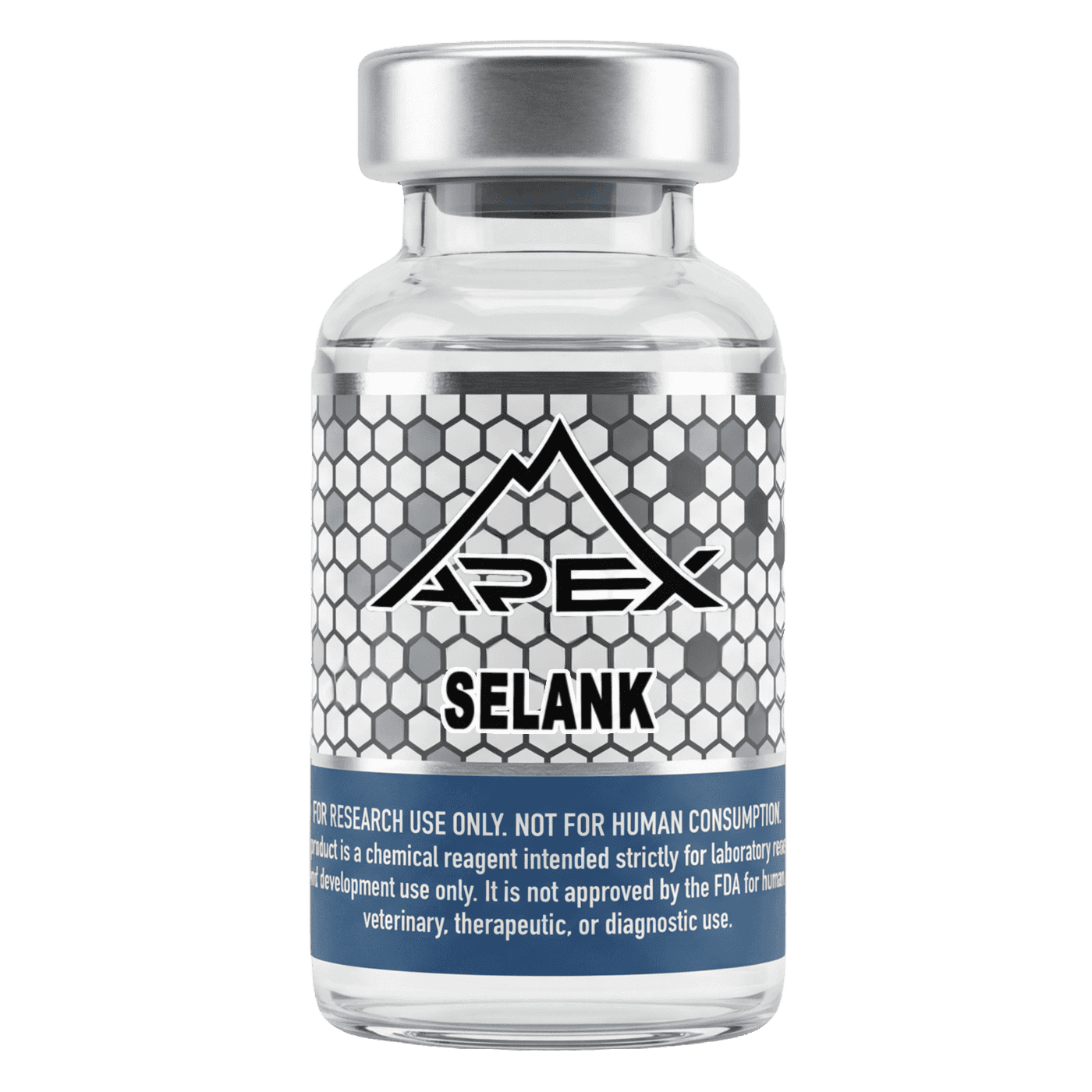
Selank
Research-grade Thr-Lys-Pro-Arg-Pro-Gly-Pro — the tuftsin-analog anxiolytic heptapeptide — verified to ≥99% purity by HPLC and mass spectrometry, with a per-lot certificate of analysis. Supplied strictly for in-vitro and preclinical research.
View Selank →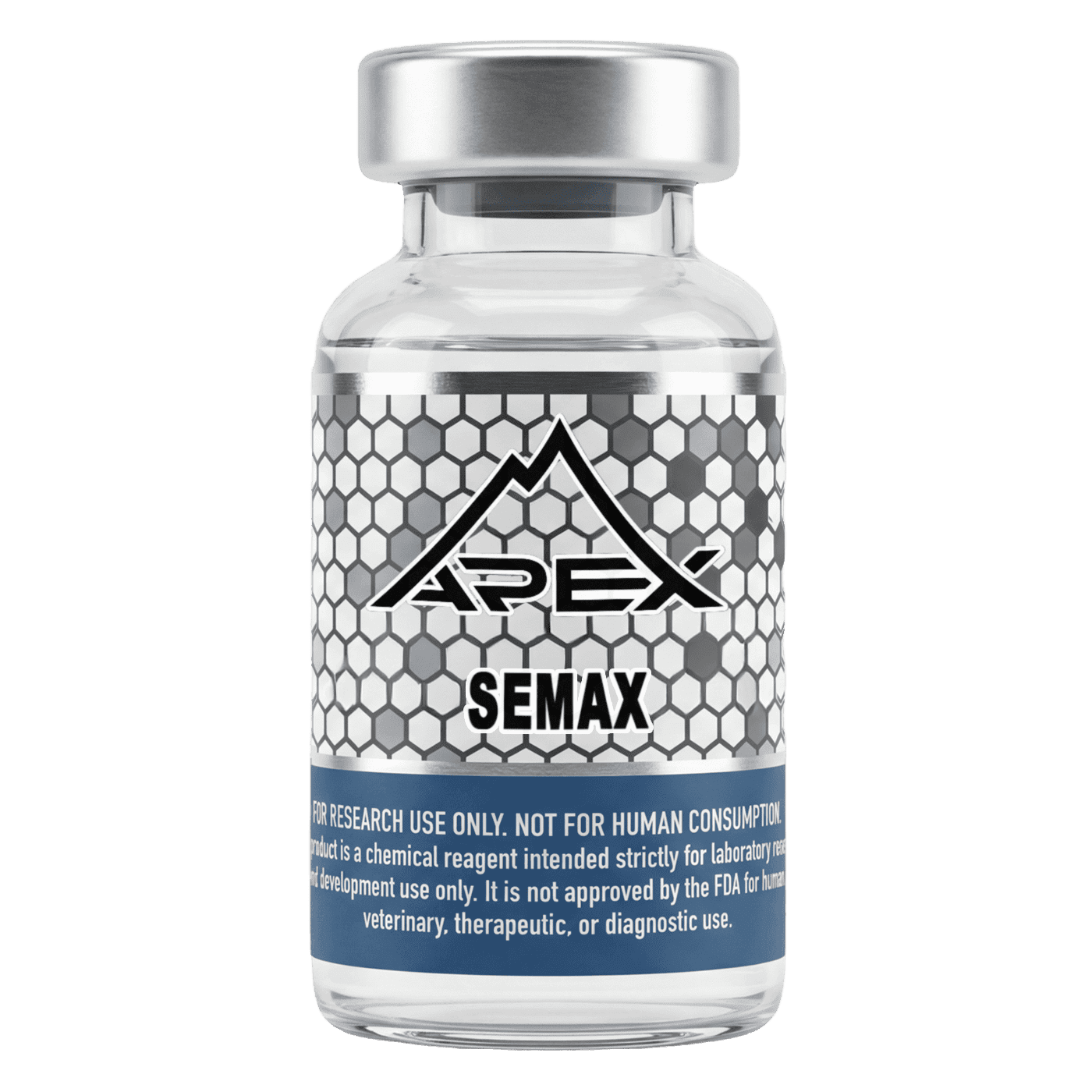
Semax
Research-grade Met-Glu-His-Phe-Pro-Gly-Pro — the ACTH(4-10)-analog neuroprotective heptapeptide — verified to ≥99% purity by HPLC and mass spectrometry, with a per-lot certificate of analysis. Supplied strictly for in-vitro and preclinical research.
View Semax →Frequently Asked Questions
What are Selank and Semax?
Selank and Semax are two synthetic heptapeptides developed at the Institute of Molecular Genetics of the Russian Academy of Sciences. Selank (Thr-Lys-Pro-Arg-Pro-Gly-Pro) is an analog of the immunopeptide tuftsin studied as an anxiolytic; Semax (Met-Glu-His-Phe-Pro-Gly-Pro) is an analog of the ACTH(4-10) fragment studied as a neuroprotective nootropic. Apex Laboratory supplies both as research-grade chemical reagents for in-vitro and preclinical research only.
What is the difference between Selank and Semax?
They share an origin and a stabilizing Pro-Gly-Pro design but target different systems. Selank is built from tuftsin and is studied mainly for anxiety, acting as a positive allosteric modulator of GABA with additional serotonergic and immunomodulatory activity. Semax is built from an ACTH fragment and is studied mainly for neuroprotection and cognition, acting through rapid upregulation of the neurotrophins BDNF and NGF. A human fMRI study directly contrasted the two and found distinguishable effects on brain connectivity (Panikratova 2020).
How does Selank work?
In research models Selank acts as a positive allosteric modulator of GABA binding, the basis of its anxiolytic effect, which comparative studies describe as similar to benzodiazepines (Vyunova 2018; Filatova 2017). It additionally enhances brain serotonin metabolism (Semenova 2009) and, reflecting its tuftsin origin, modulates the immune system by inducing interferon-alpha and shifting cytokine balance (Ershov 2009). These are cell, animal, and clinical-research findings, not demonstrated effects available from the research reagent.
How does Semax work?
Semax rapidly upregulates the neurotrophins BDNF and NGF, increasing their messenger RNA several-fold within hours in glial cultures (Shadrina 2001) and raising hippocampal BDNF and trkB signaling in vivo (Dolotov 2006). In cerebral-ischemia models it activates neurotrophin transcription and suppresses inflammatory genes (Dmitrieva 2010; Sudarkina 2021), and it binds copper(II) with high affinity, protecting against metal-induced toxicity (Tabbi 2015). All findings are from cell and animal research.
Is Selank the same as tuftsin?
No. Selank is a synthetic analog of tuftsin, the immunomodulatory tetrapeptide Thr-Lys-Pro-Arg. Selank adds a C-terminal Pro-Gly-Pro tripeptide that resists enzymatic degradation and changes the pharmacology: unlike tuftsin, Selank enhances brain serotonin metabolism (Semenova 2009). So while Selank inherits tuftsin's immunomodulatory character, it is a distinct molecule with a broader, longer-lasting profile.
Is Semax related to ACTH or a steroid hormone?
Semax is an analog of the ACTH(4-10) fragment of adrenocorticotropic hormone, but it is devoid of the parent hormone's corticotropic activity, meaning it does not stimulate steroid (cortisol) release (Tsai 2007). It retains the behavioral and neurotrophic activity associated with that ACTH region while shedding the hormonal action, which is the basis for studying it as a nootropic rather than as a hormone.
What does the Pro-Gly-Pro part of Selank and Semax do?
The C-terminal Pro-Gly-Pro tripeptide is a stabilizing motif shared by both peptides. It slows enzymatic degradation and prolongs their action. In Semax, the Pro-Gly-Pro fragment is itself reported to be biologically active in cerebral-ischemia models, so the stabilizing element is not merely inert (Dmitrieva 2010). It is the main structural feature Selank and Semax have in common.
Have Selank and Semax been studied in humans?
Yes, primarily in Russia, where both are registered medicines. Selank was compared with the benzodiazepine medazepam in patients with generalized anxiety disorder and neurasthenia (Zozulia 2008), and Semax was studied in cerebrovascular insufficiency and ischemic stroke, where it raised plasma BDNF (Gusev 2005; Gusev 2018). These clinical findings are presented as research context; they are not a basis for any use of the research-grade reagents, which are for laboratory use only.
How are Selank and Semax stored and reconstituted for research?
Both lyophilized peptides are stored at minus 20 degrees Celsius, protected from light and moisture, where the Pro-Gly-Pro motif contributes to good stability. For laboratory use they dissolve readily in bacteriostatic water; reconstituted material is held at 2 to 8 degrees Celsius with freeze-thaw cycling minimized, and longer-term aliquots are frozen at minus 20 degrees Celsius. These are laboratory-handling conventions only and are not a human dosing or administration instruction.
Are Selank and Semax FDA-approved?
No. Neither Selank nor Semax is approved by the FDA, EMA, or any other Western regulatory authority. Both are registered and used clinically in Russia, which is a factual point about those jurisdictions rather than an endorsement. The research-grade Selank and Semax supplied by Apex Laboratory are intended strictly for in-vitro and preclinical laboratory research and are not for human or veterinary use.
How is research-grade Selank or Semax purity verified?
Both are characterized by reversed-phase HPLC, which quantifies purity by separating the intended peptide from synthesis byproducts, and by mass spectrometry, which confirms identity against the expected masses near 751.9 g/mol for Selank and 813.9 g/mol for Semax. Apex supplies both at greater-than-or-equal-to 99 percent purity with per-lot certificates of analysis available through its lab-verified archive.
Continue Your Research
Related Nootropic & CNS Research Guides
Nootropic & CNS Research Peptides
The cluster hub situating Selank and Semax among nootropic and neuroprotective research reagents.
Open HubCerebrolysin Research Guide
A neurotrophic peptide preparation studied in the same neuroprotection research space.
Read GuideEpithalon Research Guide
The Khavinson tetrapeptide bioregulator studied for telomerase and pineal-axis research.
Read GuideApex Research Library
The full catalog of mechanism-level research guides across the Apex compound library.
Browse LibraryReferences
All citations were verified against the published record via the NCBI E-utilities API for existence, correct attribution, and support of the associated claim. Each links to its PubMed record.
- Vyunova TV, Andreeva L, Shevchenko K, Myasoedov N Peptide-based Anxiolytics: The Molecular Aspects of Heptapeptide Selank Biological Activity. Protein Pept Lett. 2018;25(10):914-923. PMID: 30255741
- Dolotov OV, Karpenko EA, Seredenina TS, Inozemtseva LS, Levitskaya NG, Zolotarev YA, et al. Semax, an analogue of adrenocorticotropin (4-10), binds specifically and increases levels of brain-derived neurotrophic factor protein in rat basal forebrain. J Neurochem. 2006;97 Suppl 1:82-6. PMID: 16635254
- Shadrina MI, Dolotov OV, Grivennikov IA, Slominsky PA, Andreeva LA, Inozemtseva LS, et al. Rapid induction of neurotrophin mRNAs in rat glial cell cultures by Semax, an adrenocorticotropic hormone analog. Neurosci Lett. 2001;308(2):115-8. PMID: 11457573
- Semenova TP, kozlovskiĭ II, Zakharova NM, Kozlovskaia MM [Comparison of the effects of selank and tuftsin on the metabolism of serotonin in the brain of rats pretreated with PCPA]. Eksp Klin Farmakol. 2009;72(4):6-8. PMID: 19803361
- Tsai SJ Semax, an analogue of adrenocorticotropin (4-10), is a potential agent for the treatment of attention-deficit hyperactivity disorder and Rett syndrome. Med Hypotheses. 2007;68(5):1144-6. PMID: 16996699
- Dmitrieva VG, Povarova OV, Skvortsova VI, Limborska SA, Myasoedov NF, Dergunova LV Semax and Pro-Gly-Pro activate the transcription of neurotrophins and their receptor genes after cerebral ischemia. Cell Mol Neurobiol. 2010;30(1):71-9. PMID: 19633950
- Filatova E, Kasian A, Kolomin T, Rybalkina E, Alieva A, Andreeva L, et al. GABA, Selank, and Olanzapine Affect the Expression of Genes Involved in GABAergic Neurotransmission in IMR-32 Cells. Front Pharmacol. 2017;8:89. PMID: 28293190
- Volkova A, Shadrina M, Kolomin T, Andreeva L, Limborska S, Myasoedov N, et al. Selank Administration Affects the Expression of Some Genes Involved in GABAergic Neurotransmission. Front Pharmacol. 2016;7:31. PMID: 26924987
- Sarkisova KIu, Kozlovskiĭ II, Kozlovskaia MM [Effects of heptapeptide selank on genetically-based and situation-provoked symptoms of depression in behavior in WAG/Rij and Wistar rats, and in BALB/c mice]. Zh Vyssh Nerv Deiat Im I P Pavlova. 2008;58(2):226-37. PMID: 18661785
- Ershov FI, Uchakin PN, Uchakina ON, Mezentseva MV, Alekseeva LA, Miasoedov NF [Antiviral activity of immunomodulator Selank in experimental influenza infection]. Vopr Virusol. 2009;54(5):19-24. PMID: 19882898
- Uchakina ON, Uchakin PN, Miasoedov NF, Andreeva LA, Shcherbenko VE, Mezentseva MV, et al. [Immunomodulatory effects of selank in patients with anxiety-asthenic disorders]. Zh Nevrol Psikhiatr Im S S Korsakova. 2008;108(5):71-5. PMID: 18577961
- Kolomin TA, Shadrina MI, Slominskiĭ PA, Limborskaia S, Miasoedov NF [Changes in expression of the genes for chemokines, cytokines, and their receptors in response to selank and its fragments]. Genetika. 2011;47(5):711-4. PMID: 21786679
- Zozulia AA, Neznamov GG, Siuniakov TS, Kost NV, Gabaeva MV, Sokolov OIu, et al. [Efficacy and possible mechanisms of action of a new peptide anxiolytic selank in the therapy of generalized anxiety disorders and neurasthenia]. Zh Nevrol Psikhiatr Im S S Korsakova. 2008;108(4):38-48. PMID: 18454096
- Dolotov OV, Karpenko EA, Inozemtseva LS, Seredenina TS, Levitskaya NG, Rozyczka J, et al. Semax, an analog of ACTH(4-10) with cognitive effects, regulates BDNF and trkB expression in the rat hippocampus. Brain Res. 2006;1117(1):54-60. PMID: 16996037
- Agapova TY, Agniullin YV, Shadrina MI, Shram SI, Slominsky PA, Lymborska SA, et al. Neurotrophin gene expression in rat brain under the action of Semax, an analogue of ACTH 4-10. Neurosci Lett. 2007;417(2):201-5. PMID: 17353092
- Sudarkina OY, Filippenkov IB, Stavchansky VV, Denisova AE, Yuzhakov VV, Sevan’kaeva LE, et al. Brain Protein Expression Profile Confirms the Protective Effect of the ACTH((4-7))PGP Peptide (Semax) in a Rat Model of Cerebral Ischemia-Reperfusion. Int J Mol Sci. 2021;22(12). PMID: 34201112
- Tabbì G, Magrì A, Giuffrida A, Lanza V, Pappalardo G, Naletova I, et al. Semax, an ACTH4-10 peptide analog with high affinity for copper(II) ion and protective ability against metal induced cell toxicity. J Inorg Biochem. 2015;142:39-46. PMID: 25310602
- Eremin KO, Saransaari P, Oja S, Raevskiĭ KS [Semax potentiates effects of D-amphetamine on the level of extracellular dopamine in the Sprague-Dawley rat striatum and on the locomotor activity of C57BL/6 mice]. Eksp Klin Farmakol. 2004;67(2):8-11. PMID: 15188751
- Glazova NY, Manchenko DM, Volodina MA, Merchieva SA, Andreeva LA, Kudrin VS, et al. Semax, synthetic ACTH(4-10) analogue, attenuates behavioural and neurochemical alterations following early-life fluvoxamine exposure in white rats. Neuropeptides. 2021;86:102114. PMID: 33418449
- Gusev EI, Skvortsova VI, Chukanova EI [Semax in prevention of disease progress and development of exacerbations in patients with cerebrovascular insufficiency]. Zh Nevrol Psikhiatr Im S S Korsakova. 2005;105(2):35-40. PMID: 15792140
- Gusev EI, Martynov MY, Kostenko EV, Petrova LV, Bobyreva SN [The efficacy of semax in the tretament of patients at different stages of ischemic stroke]. Zh Nevrol Psikhiatr Im S S Korsakova. 2018;118(3. Vyp. 2):61-68. PMID: 29798983
- Panikratova YR, Lebedeva IS, Sokolov OY, Rumshiskaya AD, Kupriyanov DA, Kost NV, et al. Functional Connectomic Approach to Studying Selank and Semax Effects. Dokl Biol Sci. 2020;490(1):9-11. PMID: 32342318
Research Use Disclaimer
All Selank and Semax products and the information in this guide are intended strictly for in-vitro and preclinical laboratory research. Both are research-grade chemical reagents and are not drugs, dietary supplements, or therapeutic products in the United States or the European Union. Neither is approved by the FDA or EMA; their registration as medicines in Russia is noted as a factual regulatory point only. They are not for human or veterinary consumption, diagnosis, treatment, or any clinical use. The mechanistic, anxiolytic, neurotrophic, and clinical findings summarized here derive from cell-culture, animal-model, and clinical-research studies; they are presented for research context only and do not constitute therapeutic, efficacy, or safety claims. Researchers are responsible for compliance with all applicable institutional, local, and national regulations governing the acquisition, handling, and use of research chemicals.